
Early Signs and Childhood
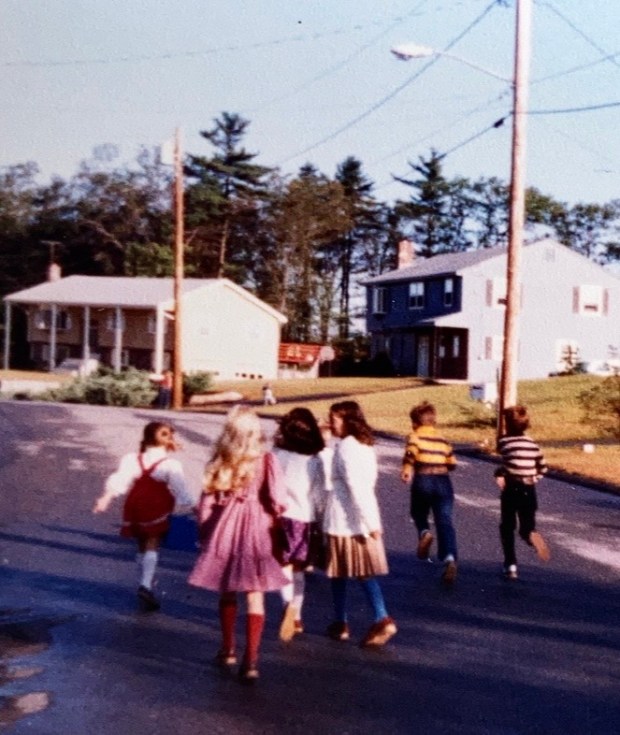
I’ve been thinking about sharing my journey because, in my case, it has been lifelong, rooted in the unique way my anatomy developed – something I would not fully understand until decades later.
As a child, I struggled with things like tennis, swimming, or carrying my schoolbooks – my arms would become exhausted quickly. Of course, no one knew why. My fatigue was always blamed on staying up late listening to music on my Sony CD Walkman (yes, that dates me) or reading into the night. I internalized it, labeling myself as lazy, unmotivated, or unable to keep up with my classmates.
I was never lazy; my body just worked differently.
As the years went by, I was misdiagnosed multiple times – chronic fatigue, depression, and other explanations that tried to account for why I was always tired. None of them captured the truth.
Persevering Through Movement
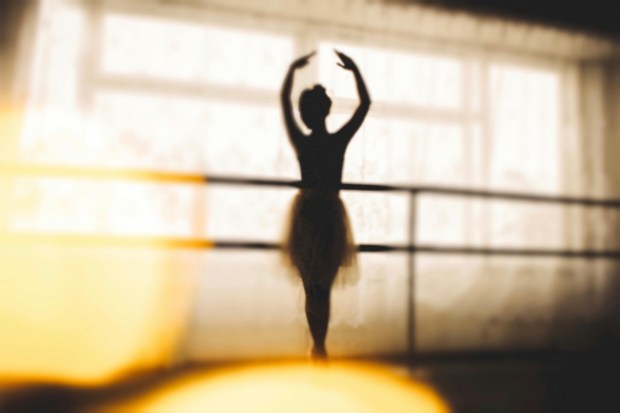
As I grew older, dance became my world. I loved it deeply. Movement felt natural to my spirit, even when it did not feel easy for my body.
What I did not understand at the time was why my arms tired so quickly, why holding them in position felt harder for me than for others, or why I often felt completely drained after rehearsals that seemed to energize my classmates. I pushed through because I loved it. I assumed everyone else was simply stronger, more conditioned, or more disciplined than I was.
I learned to ignore the fatigue. I learned to work around it. I learned to blame myself.
Over time, the exhaustion became a silent companion. Everyday tasks felt heavier than they should have. Carrying groceries, driving longer distances, even simple chores required more effort than seemed reasonable. I never connected these struggles to anything physical. I believed, as many around me did, that I simply needed to try harder.
Finding Painting
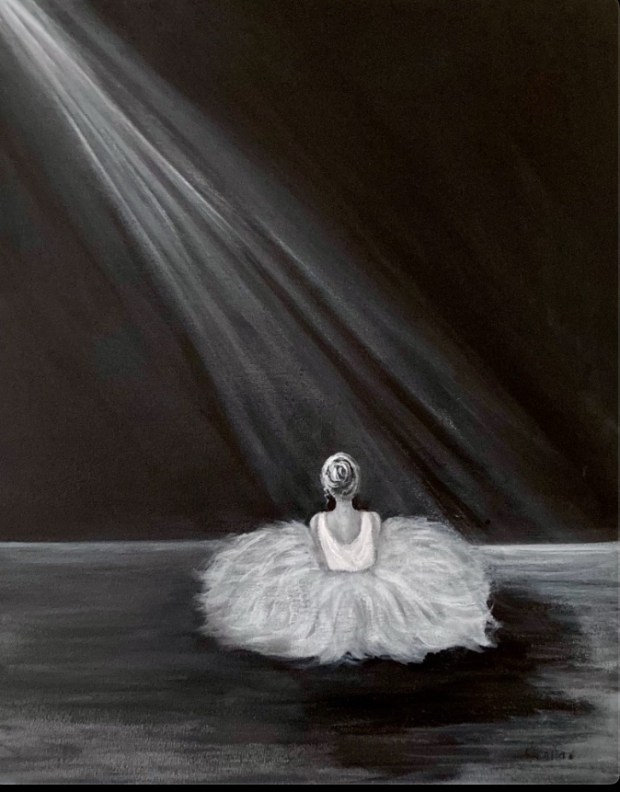
Fast forward to 2021. My dad had passed away after a long battle with cancer, and I was searching for a way to cope with the stress of the world. One day, almost on a whim, I picked up a paintbrush. I didn’t know if I would enjoy it – I just needed something to do, something to focus on, something that could give me a sense of control and calm.
Every little mark on the canvas felt like progress.
To my surprise, I fell in love with painting. Each brushstroke became a tiny act of liberation. I could create something beautiful, even though my body would tire quickly. It took me a long time to finish even a small piece – what others might complete in a single day could take me several sessions – but that didn’t matter. Every little mark on the canvas felt like progress, proof that my limitations didn’t define me.
Discovering the Cause
As I continued to reflect on my lifelong fatigue and weakness, I began to understand that my struggles weren’t just quirks or bad habits. There was a physical reason behind them. Over the years, my symptoms had worsened – I developed severe hand tremors, and even holding a paintbrush became a challenge. Everyday tasks that used to be simple became exhausting, frustrating, and sometimes impossible.
After years of misdiagnoses, I finally received a diagnosis I could understand: Bilateral Thoracic Outlet Syndrome (TOS). In my case, it affected both nerves and both subclavian arteries, meaning that blood flow to my arms was compromised along with nerve signals. My anatomy had been working against me all along – extra cervical ribs, dense scar tissue built up from decades of irritation, and lifelong compression explained why my arms would tire so quickly and why I often felt off-balance and shaky.
On November 19, 2025, I had my surgery on my right side to relieve severe compression. Now, ten weeks into recovery, my arm still burns and trembles at times, and even small tasks require patience. I haven’t picked up a paintbrush yet because my body isn’t ready, but the idea of returning to painting is what keeps me hopeful.
Healing is a journey, not a race.
This experience has taught me that healing is a journey, not a race. Even though I can’t paint today, I can plan, dream, and imagine returning to the canvas – and that hope is an important part of recovery. My art has always been part of who I am, and I know it will become a bridge between my body and spirit again once I’m physically ready.
Reflections and Hope
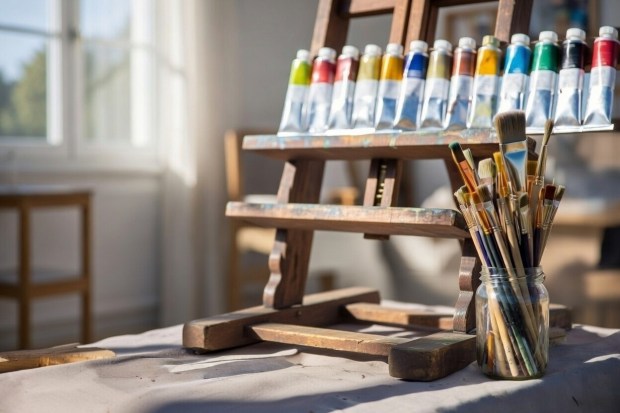
Even though I’m only ten weeks into recovery from my first operation, I’ve already learned that healing is a slow, patient process. My body has been telling me for decades what it needed, and now I finally understand it. The fatigue, weakness, and nerve flare-ups were never a reflection of my motivation or worth – they were my body’s way of signaling a deeper problem.
I haven’t painted yet, but I dream about returning to the canvas. I know that when the time is right, every brushstroke will be a small victory – a celebration of patience, perseverance, and the joy of creating despite challenges.
Even when recovery feels slow, there is hope and progress ahead.
To anyone reading this who has struggled with invisible conditions, misdiagnoses, or limitations that make you feel different or less than, I want you to know: you are not broken, and your journey is valid. Healing takes time, and your passions and creativity can endure alongside it.
My journey is just beginning, and sharing it here is my way of connecting with others who might feel alone. Even when recovery feels slow, there is hope, there is progress, and there is a future where you can fully reclaim what you love.
 Jennifer Pentland Art